Your lead engine can look busy and still be stuck. A rep opens the CRM, sees a “qualified” account, and starts the wrong sequence because the company moved, the role changed, or the firmographic record is months old. That's the hidden failure mode in many b2b saas lead generation strategies, most of them depend on current company and contact data more than teams admit. When the data is fresh, routing gets cleaner, personalization gets sharper, and response times improve because people are no longer guessing who the buyer is or what changed.
That's why the strongest programs mix inbound, outbound, product-led, partner, and enrichment motions instead of betting on one channel. Buyers also do more research on their own now, and many want a sales experience that doesn't force interaction too early, which makes decision-stage content and self-serve proof points more important than ever, as outlined in this overview of building qualified buying conversations. The ten strategies below all work better when the company and professional data behind them is live, not stale. Each one includes a practical implementation step, a metric to watch, and the execution gain you get from fresher data.
Table of Contents
- 1. Account-Based Marketing
- 2. Inbound Content Marketing and SEO
- 3. Product-Led Growth With a Free Tier
- 4. Intent Data and Trigger-Based Prospecting
- 5. Cold Outbound With Data-Driven Personalization
- 6. Real-Time Lead Enrichment at Conversion Points
- 7. Free Tools and Lead Magnets
- 8. Integration Marketplace and Partner Co-Selling
- 9. Referral and Customer Advocacy Programs
- 10. Social Selling and Engagement-Based Prospecting
- B2B SaaS Lead Gen, 10-Strategy Comparison
- Turning Ten Tactics Into a Lead Engine You Can Measure
1. Account-Based Marketing
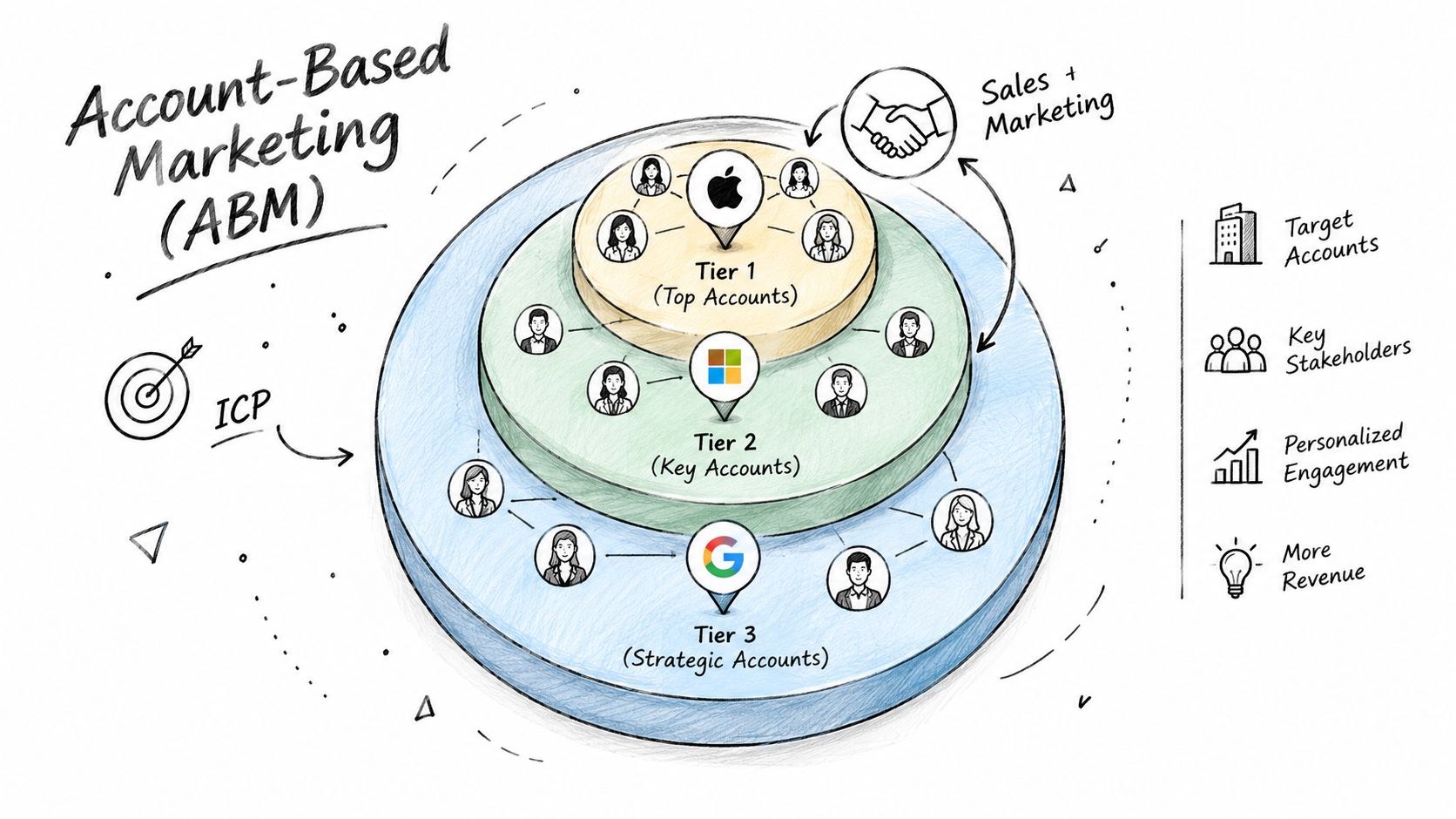
ABM works when the account list is tight and the buying group is mapped before outreach starts. In practice, that means marketing and sales agree on an ICP, pick named accounts, then build messaging for the stakeholders inside each company instead of chasing isolated leads. For enterprise SaaS, that usually means the difference between broad awareness and actual pipeline quality. A company URL or verified domain should be the unique key, because duplicates across tools create bad routing and messy reporting.
Build the account list from live firmographics
If your target accounts are growing, shrinking, or shifting industries, last quarter's list will mislead scoring. Refresh headcount, industry, and headquarters on a schedule, then use those fields to keep account tiers current. That's where a B2B data API helps, because it can populate and validate account records automatically instead of forcing manual research.
Practical rule: map at least three to five stakeholders per account before the first coordinated outreach wave. An account with one contact is not an account plan, it's a partial record.
A practical test is to compare meeting rates across refreshed versus untouched account lists. If the fresh list routes the right rep faster and produces cleaner conversations, the data layer is doing real work. For Fetchin, the company endpoint fits this motion well because it can return current firmographic fields in structured JSON and reduce manual account cleanup.
2. Inbound Content Marketing and SEO
Inbound works best when a page answers a live buying question, not when it only fills a publishing calendar. Comparison pages, implementation guides, customer proof, and technical documentation attract visitors who are already sorting vendors and testing fit. Buyers now do much of that research online before they ever speak with sales, and many prefer to keep the process self-directed across several channels.
Publish pages that match evaluation intent
Comparison and alternatives queries usually carry more intent than broad awareness topics. A developer evaluating a B2B data API may look for enrichment accuracy, JSON workflows, API latency, or real-time company resolution, so those terms should shape the page structure and headings. The page should still end with a clear next step, such as a trial, demo, or sample lookup, but the path to conversion should stay optional and relevant to the content.
Decision-stage content works best when it helps the buyer validate fit without forcing a meeting first.
That is where live professional and company data changes execution speed. If search demand shifts toward a new integration, industry, or use case, refresh the page copy and examples quickly so the content stays aligned with how buyers are evaluating tools. For Fetchin, technical walkthroughs can show how profile, company, and engagement data are retrieved in code. Use that format to serve both engineers and business buyers, then track organic-qualified visits and lead-to-meeting rate so you can see whether the page is pulling in real opportunities, not just traffic.
3. Product-Led Growth With a Free Tier
PLG works when the product gives value before the buyer has to talk to anyone. That matters in SaaS because technical evaluators often want to test the workflow themselves, then bring the tool to a team discussion later. If the first win comes quickly, users are more likely to understand the product's value and share it internally. If the first run feels slow or unclear, they leave before activation.
Define activation around a concrete first win
The wrong way to run a free tier is to treat all sign-ups the same. The better way is to define the activation milestone, then watch how many free users reach it. For a professional data API, that might be the first successful profile or company lookup, the first structured JSON response, or the first workflow that uses returned fields in a downstream product step.
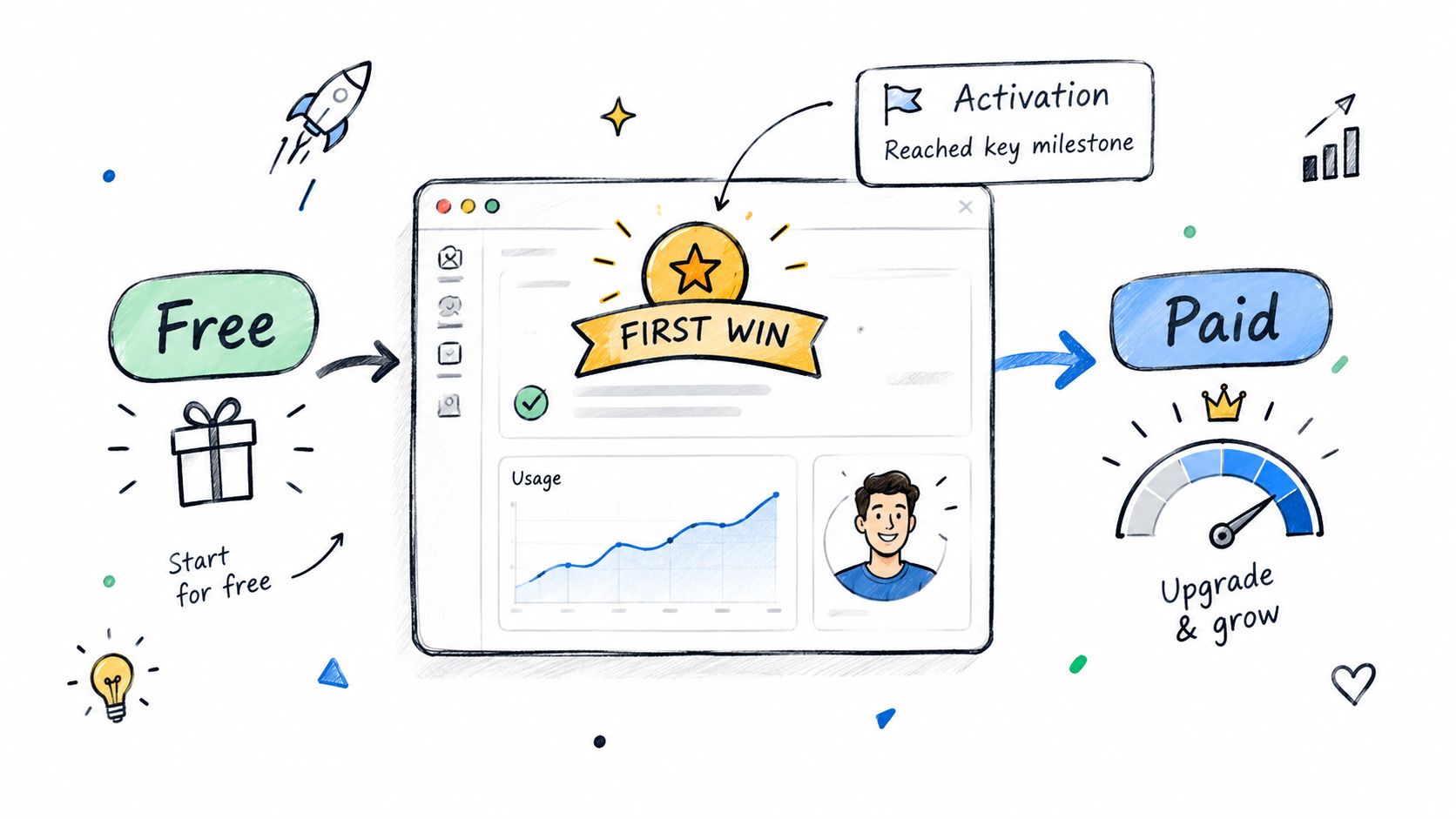
For Fetchin, the free tier gives engineers a way to test profile and company responses before committing, and failed requests do not consume credits. That lowers friction during evaluation and gives sales a cleaner signal, because usage data shows real intent instead of curiosity alone. The metric to watch is activation rate among free sign-ups, paired with expansion from usage-based signals like credits consumed or API calls.
4. Intent Data and Trigger-Based Prospecting
Trigger-based prospecting works only when the signal is current enough to justify action. Hiring, leadership changes, funding, technology adoption, and topic engagement can all point to a live buying window, but stale signals create awkward outreach and bad timing. The 2026 compilation on lead generation economics showed why precision matters, since cheap traffic can convert poorly while high-intent programs justify higher acquisition costs when qualification improves (lead generation statistics 2026).
Combine signals before routing the account
One signal is often noise. Two or more signal types give you a better chance of reaching someone while the project is active. A clean workflow is to combine, for example, hiring plus funding, then set an expiry window so old events don't keep driving outreach.
Public company updates and engagement signals need the same care on compliance and timing. Use public information, document the lawful basis for processing, and avoid building workflows around anything you can't verify as current. For a practitioner, the point is simple, act when the market window is open, not after it has closed.
The internal use case for this is straightforward, buying-signal data can help teams fetch current company and profile pages on demand instead of relying on a periodic snapshot. That makes the outreach list feel live, not recycled. Measure signal-to-meeting rate, and retire any trigger that keeps producing dead conversations.
5. Cold Outbound With Data-Driven Personalization
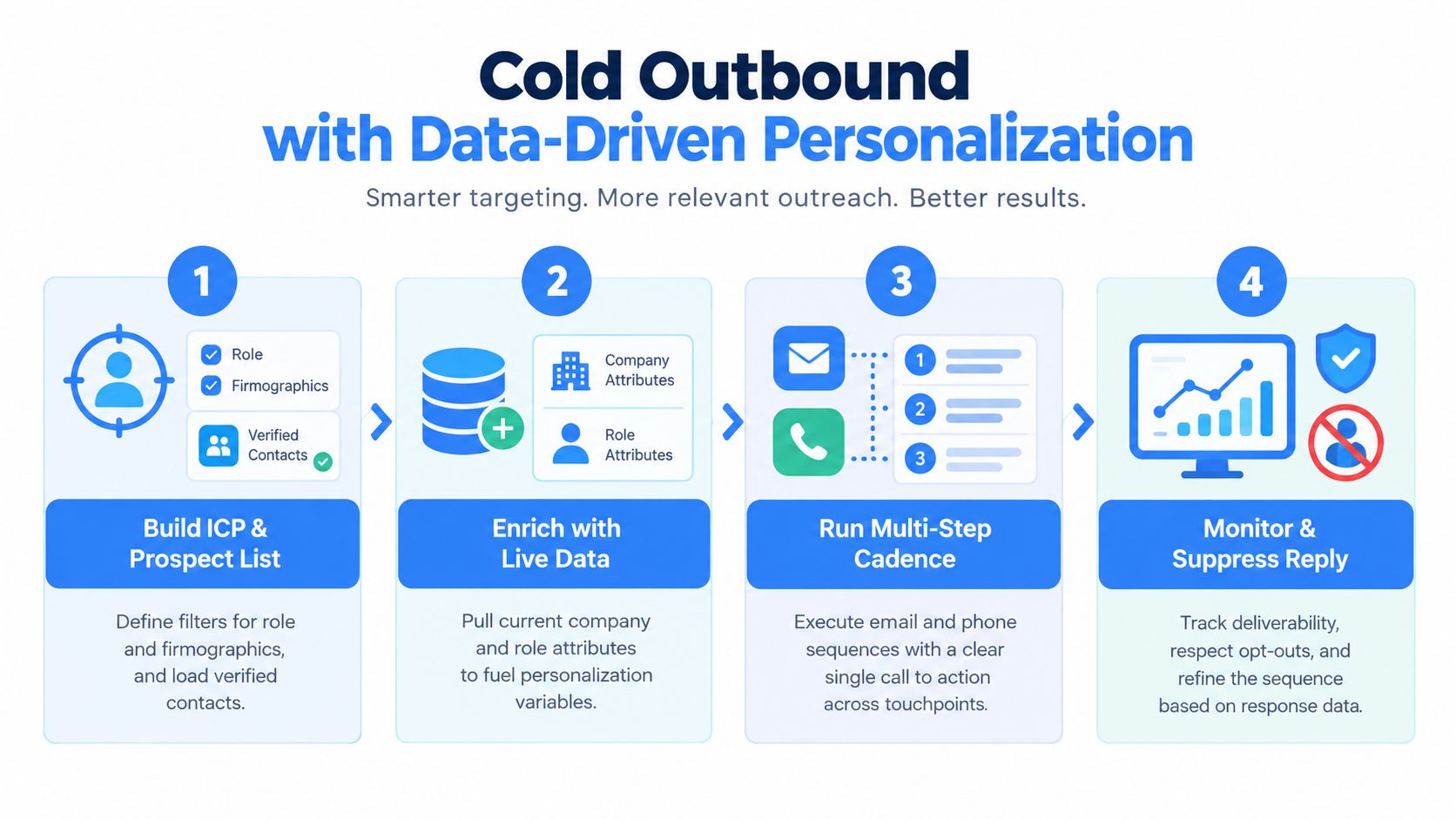
Cold outbound gets results when the message shows real knowledge of the recipient and the company. Use current contact data, role context, and one verifiable company fact, then keep the ask small. Fresh signals matter because stale personalization feels generic fast, and a recycled insight lowers response quality.
Personalize with one verifiable detail
Use one concrete detail, such as a product launch, hiring pattern, or technology shift, and make the next step easy to say yes to. Long sequences with multiple calls to action usually blur the point. Short sequences are faster to send, simpler to review, and easier to improve after each round.
A short, accurate message beats a long sequence with weak fit every time.
For personalization variables, Fetchin can supply positions, skills, and headcount from profile and company fields, so reps can work from current records instead of manual research. That speeds execution and keeps the copy tied to live account context. Track reply-to-meeting rate, because replies show whether the message matched the account's current situation.
This segmentation guide helps when outbound needs tighter targeting than a single broad list can provide.
6. Real-Time Lead Enrichment at Conversion Points
Real-time enrichment matters most at the exact moment a prospect converts. A demo request, trial sign-up, or content download is the best time to capture the current company context, route the lead correctly, and avoid a delayed manual lookup. If enrichment is slow, you create a bad form experience. If it's stale, you route people based on a company state that no longer exists.
Set a latency budget before you deploy the form
Don't test only the average response time. Test the 95th percentile, because that's what customers feel when the form stalls. Store the enrichment timestamp alongside the record so downstream teams can see how fresh the data was when routing happened.
Operational rule: if enrichment can't happen fast enough to protect the sign-up flow, move it to asynchronous processing for backfills and keep the live path synchronous only for conversion moments.
The lead enrichment API is useful here because it's designed for synchronous lookups with optional asynchronous delivery for slower workflows (lead enrichment API). Fetchin's measured behavior, with a median response near one second and P95 near 1.5 seconds under production load, makes synchronous enrichment practical for live forms. Measure enrichment latency at P95 and route accuracy, then watch whether faster follow-up improves meeting conversion.
7. Free Tools and Lead Magnets
Free tools work because they let buyers touch the problem before they commit to the full product. A lookup, checker, or calculator can rank in search, earn links, and show enough value to start a buying conversation. The tool doesn't need to solve everything. It needs to answer the one question your ICP keeps asking.
Build a tool around a repeated question
If the same question appears in sales calls, support tickets, and outbound research, it's probably a good tool idea. Give the visitor a meaningful partial result, then reserve the full report or deeper workflow for a sign-up. That keeps the experience useful without giving away the whole product.
For Fetchin, a free lookup that returns structured JSON for a sample company or professional profile URL can demonstrate data quality directly. That is more persuasive than a marketing claim, because the buyer sees the output shape and field depth immediately. The metric to track is tool-to-trial conversion, since that shows whether the utility creates real product interest.
8. Integration Marketplace and Partner Co-Selling
Integration marketplaces work because buyers already trust the platform they're using. When a SaaS product shows up inside a CRM, sales platform, or data ecosystem, it feels less like a cold pitch and more like a useful add-on. Partner co-selling adds another layer, since the partner brings credibility and a warmer path into the account.
Start with the platform your ICP already uses
Build the first integration for the environment your buyers touch every day, then publish a clear quickstart and sample JSON responses. Partner review moves faster when the technical path is obvious. Pipeline reporting also needs to be agreed before launch, or everyone ends up arguing over attribution later.
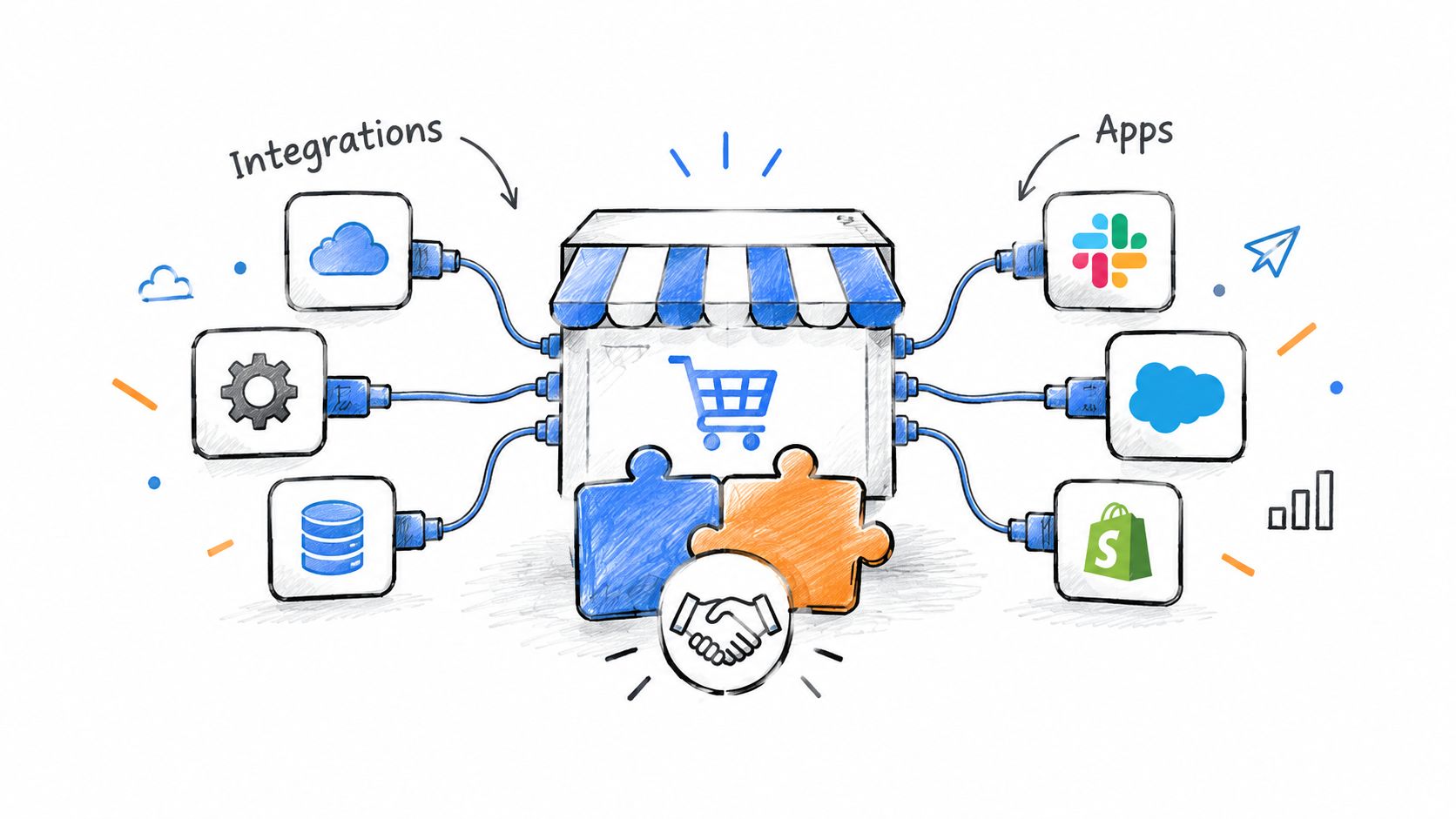
Fetchin fits this motion because its consistent JSON schemas and dashboard controls for credits and rate limits make partner support easier. That cuts friction for implementation teams and reduces surprises after launch. Measure partner-sourced pipeline and time-to-first-integrated-customer, because both show whether the partnership is useful or just visible.
9. Referral and Customer Advocacy Programs
Referrals work because they borrow trust that already exists. Advocacy programs go further, turning satisfied customers into references, case study subjects, and speakers. In technical SaaS, that often matters more because product teams usually trust peer recommendations over polished sales material.
Make the referral path effortless
A single-step share link or one-click introduction request usually works better than a complex referral portal. Credit the referrer only after the referred account reaches a meaningful milestone, or you invite low-quality submissions and gaming. Use product usage to find customers who already behave like advocates, then invite them into the program while their experience is still fresh.
As noted earlier, 84% of B2B buyers in the cited demand research are dealing with complex buying groups, which makes trusted internal champions especially valuable in multi-stakeholder deals. Keep the referral motion aligned with that reality, not a one-to-one contact model. A developer-tool company can get strong reference value when customer admins share rollout notes, integration lessons, or internal how-to guides with peers. Track referred lead-to-close rate and the number of deals that include a customer reference touch.
10. Social Selling and Engagement-Based Prospecting
Social selling works when the engagement is meaningful, not noisy. A comment that asks about a problem is a stronger signal than a reaction with no context. Public professional activity also helps you see which stakeholders are active before you send a message, which makes outreach more relevant.
Score intent, not just volume
Look at comments, replies, and topic relevance before you look at total engagement counts. Pair the activity with firmographics so you don't spend time on accounts that miss the ICP. Keep the data collection public and documented, because the point is to start useful conversations, not to over-collect.
Public engagement is most useful when it points to a current problem the buyer is trying to solve.
Fetchin's posts, comments, and reactions endpoints fit this workflow because they consolidate engagement data into one structured JSON API. That reduces the number of tools your team needs to monitor activity and makes refresh cycles faster. Measure engagement-to-meeting conversion and content-assisted pipeline by topic cluster, then keep building around the posts that attract active buyers.
B2B SaaS Lead Gen, 10-Strategy Comparison
| Strategy | 🔄 Implementation Complexity | ⚡ Resource Requirements | ⭐ Expected Outcomes | 📊 Ideal Use Cases | 💡 Key Advantages & Tips |
|---|---|---|---|---|---|
| Account-Based Marketing (ABM) | High 🔄🔄🔄, cross-functional orchestration | High ⚡, dedicated AM/BDR, data platforms, creative | ⭐⭐⭐⭐, higher-quality pipeline, larger ACV | Enterprise B2B, complex buying committees, high ACV deals | Targeted pipeline and measurable account ROI; tip: refresh firmographics and map 3–5 stakeholders |
| Inbound Content Marketing & SEO | Medium 🔄🔄, strategic content + SEO cadence | Medium ⚡, content team, SEO tools, promotion | ⭐⭐⭐⭐, compounding organic leads, lower CPL over time | Products with research-driven buyers, long sales cycles | Builds authority and sustainable traffic; tip: target comparison queries and publish original benchmarks |
| Product-Led Growth (Free Tier) | Medium 🔄🔄, product design + onboarding flows | Medium–High ⚡, product dev, analytics, support | ⭐⭐⭐⭐, low-friction acquisition, usage-driven expansion | Developer/technical buyers, self-serve products with quick wins | Scales via product adoption; tip: define activation milestone and use usage signals to qualify accounts |
| Intent Data & Trigger-Based Prospecting | Medium 🔄🔄, signal integration and routing | Medium ⚡, intent providers, ops, routing logic | ⭐⭐⭐⭐, better timing and relevance of outreach | Accounts with episodic buying signals, timing-sensitive outreach | Improves outreach timing; tip: combine signals, set expiry windows, verify privacy compliance |
| Cold Outbound with Data-Driven Personalization | Medium–High 🔄🔄🔄, sequence design + deliverability | Medium ⚡, contact data, sequencing platform, deliverability ops | ⭐⭐⭐, direct access to decision makers, variable response | Markets with low inbound demand or targeted account lists | Scalable direct outreach if personalized; tip: use verifiable company facts and respect opt-outs |
| Real-Time Lead Enrichment at Conversion Points | Medium 🔄🔄, integration + latency control | Medium ⚡, enrichment API, engineering, monitoring | ⭐⭐⭐⭐, faster routing, improved scoring accuracy | High-volume sign-ups, demo/trial conversion flows | Speeds routing and reduces form friction; tip: set latency SLAs and store enrichment timestamps |
| Free Tools & Lead Magnets | Medium 🔄🔄, build + maintenance and UX | Medium ⚡, dev resources, SEO, analytics | ⭐⭐⭐, attracts search traffic and sign-ups | Top-of-funnel acquisition, SEO-driven audiences | Earns links and demonstrates value; tip: show meaningful partial results then gate full report |
| Integration Marketplace & Partner Co‑selling | High 🔄🔄🔄, integration dev + partner ops | High ⚡, engineering, certification, partner management | ⭐⭐⭐⭐, access to partner audiences and referrals | Products that complement platform ecosystems and enterprise buyers | Higher trust via partner validation; tip: prioritize platform most used by ICP and provide quickstarts |
| Referral & Customer Advocacy Programs | Low–Medium 🔄🔄, program design and ops | Low–Medium ⚡, incentives, program manager, tracking | ⭐⭐⭐⭐, high-quality leads, faster closes | Companies with satisfied customers and strong product usage | Low-cost, high-trust pipeline; tip: make referral a single step and reward after milestone |
| Social Selling & Engagement-Based Prospecting | Medium 🔄🔄, monitoring + relationship building | Low–Medium ⚡, social tools, time for engagement | ⭐⭐⭐, warm conversations, insight-driven outreach | Relationship-driven sales and thought-leadership markets | Builds early relationships and topic insight; tip: score engagement by intent and pair with firmographics |
Turning Ten Tactics Into a Lead Engine You Can Measure
The strongest b2b saas lead generation strategies work together, not in isolation. Start with ICP definition and firmographic accuracy, then layer in intent signals, outbound personalization, conversion-point enrichment, and the content that helps buyers self-qualify before they ever talk to sales. The buyer behavior data points to a self-directed journey, the lead economics data shows why raw volume can mislead, and the content benchmarks show why measurement needs to follow the buyer through the funnel, not just the form fill (buyer behavior summary, lead generation statistics 2026, buyer statistics and insights).
A practical next step is to choose two tactics that fit your current motion, then give each one a single metric. For example, pair ABM with lead-to-meeting rate, or real-time enrichment with enrichment latency at the 95th percentile. Set the instrumentation before launch, let the programs run for 90 days, and compare results by cohort instead of by anecdote. That gives you enough time to see whether faster data, better routing, and tighter qualification are improving pipeline quality or just creating more activity.
If your team uses multi-touch reporting, keep attribution honest and consistent, because different channels influence the same account at different points in the journey. A clean measurement model matters almost as much as the tactic itself, and the more current your data is, the more reliable every decision becomes (multi-touch attribution). Fresh, verifiable data makes the entire system more trustworthy, from first touch to closed-won.
Fetchin provides a real-time B2B data API that turns professional profile and company URLs into structured JSON, which is a practical fit for enrichment, routing, and engagement-driven outreach. If you want fresh company and profile data to support these lead generation workflows, visit Fetchin and see how live lookup can slot into your forms, scoring, and outbound systems.